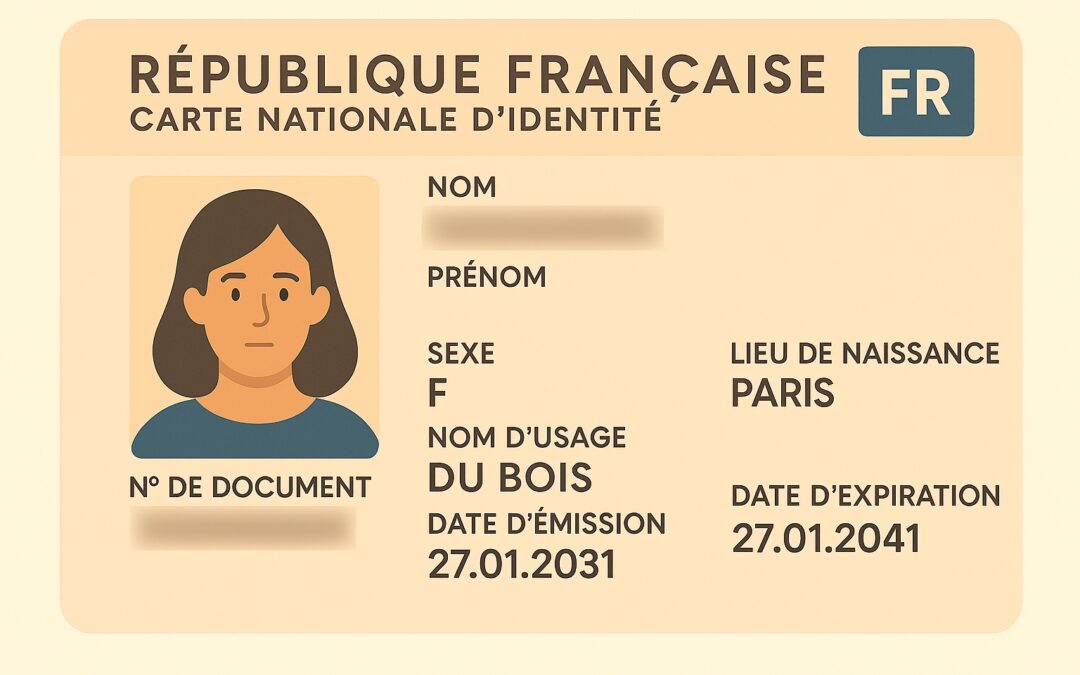
A last name is more than an administrative identifier. It plays a central role in a person’s social, professional, and personal identity.
After a divorce, using a former spouse’s last name in France is strictly regulated under French law.
What happens to the use of a married name once the divorce is final?
1. General rule: automatic loss of the right to use the former spouse’s name
The rule is clear : after a divorce, each former spouse automatically loses the right to use the other spouse’s last name.
This principle applies regardless of:
-
-
- the spouses’ gender,
- the type of marriage, including same-sex marriage,
- or the form of divorce, whether contested or by mutual consent.
-
The loss of the right to use the former spouse’s name is automatic and does not require any specific decision by the court.
2. Exceptions: when can a former spouse keep using the other’s last name?
2.1. Two exceptions provided by law
French civil law allows only two exceptions under which a former spouse may continue using the other spouse’s last name after divorce:
- Consent of the former spouse : A former spouse may continue using the other’s last name if the latter expressly agrees.
- Court authorization based on a legitimate interest : In the absence of consent, the judge may authorize continued use of the former spouse’s last name if the requesting party demonstrates a legitimate interest, either personal or related to the children.
2.2. Common examples of a legitimate interest
Judges assess the existence of a legitimate interest on a case-by-case basis.
It may be recognized in particular in the following situations:
-
-
- Professional necessity : The spouse has built a professional or artistic reputation under the married name.
- Children’s interest : To allow a parent to continue bearing the same last name as the children, or in specific circumstances relating to a child’s situation.
- Length of the marriage and social integration : A long marriage and a well-established use of the name in professional or administrative contexts.
-
The judge has full discretion in this assessment.
3. Scope, duration, and revocation of authorization
3.1. Duration and limits of authorization
Authorization to use the former spouse’s last name, whether granted by agreement or by court order, may be:
-
-
- Unlimited or time-limited, for example for the period during which the parent has primary responsibility for the children;
- Restricted to specific uses, such as professional use only.
-
3.2. Revocation of authorization
-
-
- Revocation for abusive use : Even when granted by agreement, authorization may be withdrawn if the use of the name becomes abusive.
- Effect of remarriage : Remarriage of the former spouse using the name does not automatically constitute abusive use. However, a clause providing that the right to use the name ends upon remarriage is valid if it was expressly included in the authorization.
-
4. Consequences of unauthorized use
If a former spouse continues to use the other’s last name without authorization, or despite refusal or withdrawal of consent, they may face:
-
-
- a court order prohibiting further use of the name, potentially subject to daily penalties;
- civil liability for harm suffered by the former spouse, including:
- removal of the name from publications or professional materials,
- or an award of damages.
-
5. Key takeaways
-
-
- The general rule is the loss of the right to use the former spouse’s last name after divorce.
- Exceptions are limited to express consent or court authorization based on a legitimate interest.
- Authorization may be limited in time, restricted to certain uses, or revoked in cases of abuse.
- Unauthorized use may lead to civil sanctions.
-
Conclusion
The use of a former spouse’s last name after divorce is strictly regulated under French law.
It is not an “acquired right”, but an exceptional possibility subject either to the former spouse’s consent or to judicial authorization based on a legitimate interest.
Outside these limited circumstances, the former spouse must resume using their birth name.
This legal framework seeks to protect both personal identity and individual marital freedom, while allowing narrowly tailored exceptions that reflect social and professional realities.
For legal advice or assistance tailored to your situation, you may schedule an appointment.
© Photo : AI