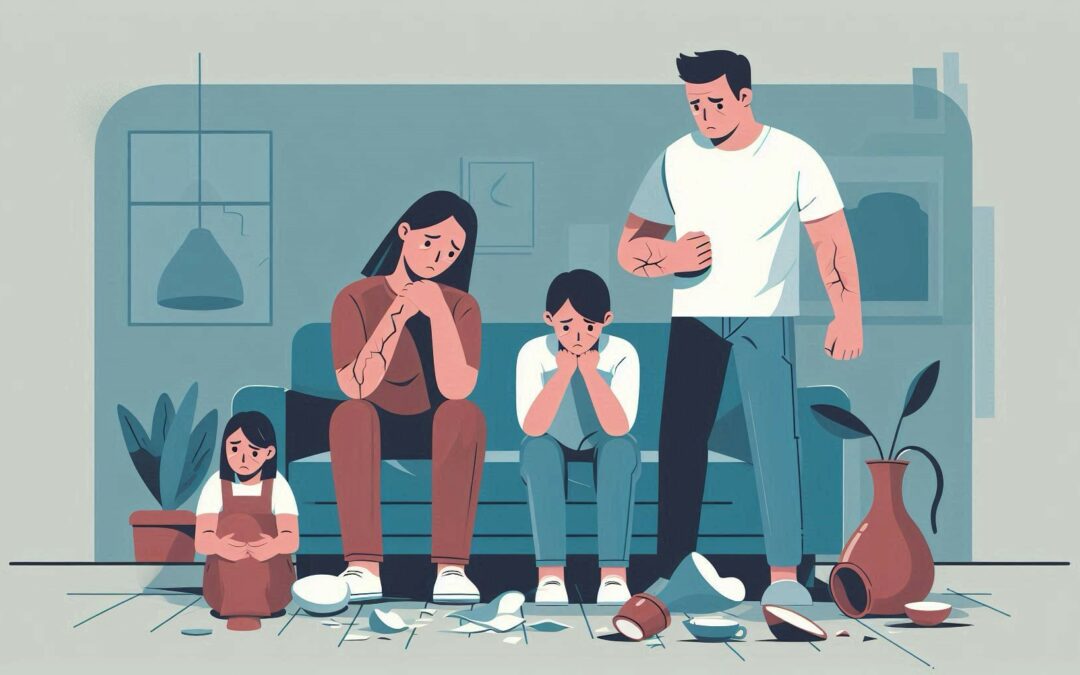
Family violence is no longer considered a private matter. It is now a top priority for public authorities, courts, and legal professionals.
These situations can take many forms—domestic, sexual, emotional, educational, or even economic abuse.
Addressing them requires a coordinated civil and criminal response.
In practice, victims may have to navigate multiple legal proceedings at the same time.
This is why comprehensive legal support is essential to ensure safety and clarity at every stage.
1. What Is Considered Family Violence?
Family violence includes all acts of abuse occurring within the family or between partners. It encompasses:
-
-
- Domestic violence: affecting spouses, partners, civil partners, or former partners. Abuse may be physical, psychological, or financial.
- Sexual violence: including rape, incest, and sexual assault committed by a relative.
- Child abuse: physical or emotional mistreatment. The July 10, 2019 legislation also targets so‑called “ordinary educational violence.”
- Economic violence: restricting access to financial resources or exercising coercive control over household finances.
- Coercive control: a pattern of domination that deprives the victim of autonomy and freedom of action.
-
2. Civil Remedies: Protecting the Family
Civil measures allow the court to swiftly reorganize family life. They aim to protect the victim and children while establishing new safeguards.
2.1. Protection Orders
The Protection Order is the primary civil tool issued by the Family Court Judge. It protects victims on an urgent basis, without requiring a criminal complaint.
Key points include:
-
-
- Extended duration: protection now lasts 12 months instead of 6, giving victims more stability to plan their future.
- Concrete measures: the judge may remove the violent partner from the home, grant the victim exclusive use of the residence, and prohibit all contact.
- Immediate provisional order: offering temporary safety while the judge reviews the case.
-
2.2. Parental Authority and the Protection of Minors
Violence directly impacts parental rights.
The judge may restrict or suspend a violent parent’s visitation rights to protect the child.
Laws passed in 2019 and 2024 also authorize the withdrawal of parental authority in cases of severe violence. These civil measures complement criminal proceedings to ensure long-term protection for children.
3. Criminal Proceedings: Punishing and Preventing
The criminal justice system plays a crucial role in sanctioning offenders and reinforcing the victim’s safety.
3.1. Criminal Offenses and Penalties
Penalties are significantly harsher when the victim is a minor or a family member.
For example, rape committed by a spouse is punishable by up to 20 years’ imprisonment.
French criminal law also recognizes incest as a specific offense, reflecting the victim’s vulnerability and the authority exerted by the perpetrator.
3.2. Protective Monitoring Tools
Several mechanisms strengthen a victim’s security:
-
-
- Anti-Approach Bracelet (BAR): electronically monitors the offender’s compliance with exclusion zones.
- Emergency Protection Phone (TGD): allows victims to instantly alert authorities in case of danger.
- Electronic monitoring: which may be imposed by a judge as early as the investigation phase.
-
4. Children: Both Victims and Witnesses
Children are often the silent victims of intra-family violence. Whether they suffer direct abuse or witness it, the consequences can be profound.
4.1. Lasting Impact
Research shows that violence disrupts a child’s emotional security and development.
This is why the law increasingly promotes positive and non-violent parenting.
4.2. Strengthened Rights for Minors
Children now benefit from enhanced protections during legal proceedings:
-
-
- They may testify before criminal courts.
- They may bring civil claims through an ad hoc guardian.
- Medical confidentiality may be adjusted to protect them in suspected abuse cases.
-
5. A More Coordinated Justice System
Faced with the urgency of such cases, the French justice system is evolving.
Since January 1, 2024, specialized units have been established within every court.
These units coordinate the work of family judges, juvenile judges, and criminal judges to ensure rapid, consistent responses and to avoid leaving any victim without support.
Conclusion: Acting Quickly to Ensure Long-Term Safety
Family violence is never inevitable. Your safety—and that of your children—comes first.
In an immediate emergency, call the police by dialing 17.
For confidential advice, information, or support, you can also call 3919, the national hotline for women affected by violence.
French law provides a comprehensive set of tools to protect victims and sanction perpetrators.
However, the complexity of navigating civil and criminal procedures makes legal assistance essential.
A lawyer can help you:
-
-
- Clearly identify the acts of violence.
- Build a solid legal strategy (complaint, protection order, divorce, etc.).
- Protect your rights and secure the future of your children.
-
If you need help—or if you are concerned about a loved one—do not hesitate to schedule a consultation. Professional legal guidance can ensure swift, effective protection.
© Photo : AI